Daily short video for your brand — screened before it ever posts.
SynthCast writes, voices, renders and publishes short-form video on a schedule. Then it screens every video against your rules and waits for your approval before anything reaches your channels.
Honest status: this engine has been running my own Farsi-language channel in production, every day, for months. It is not a beta concept — but it is not a big company either. I'm onboarding a small number of first customers by hand.
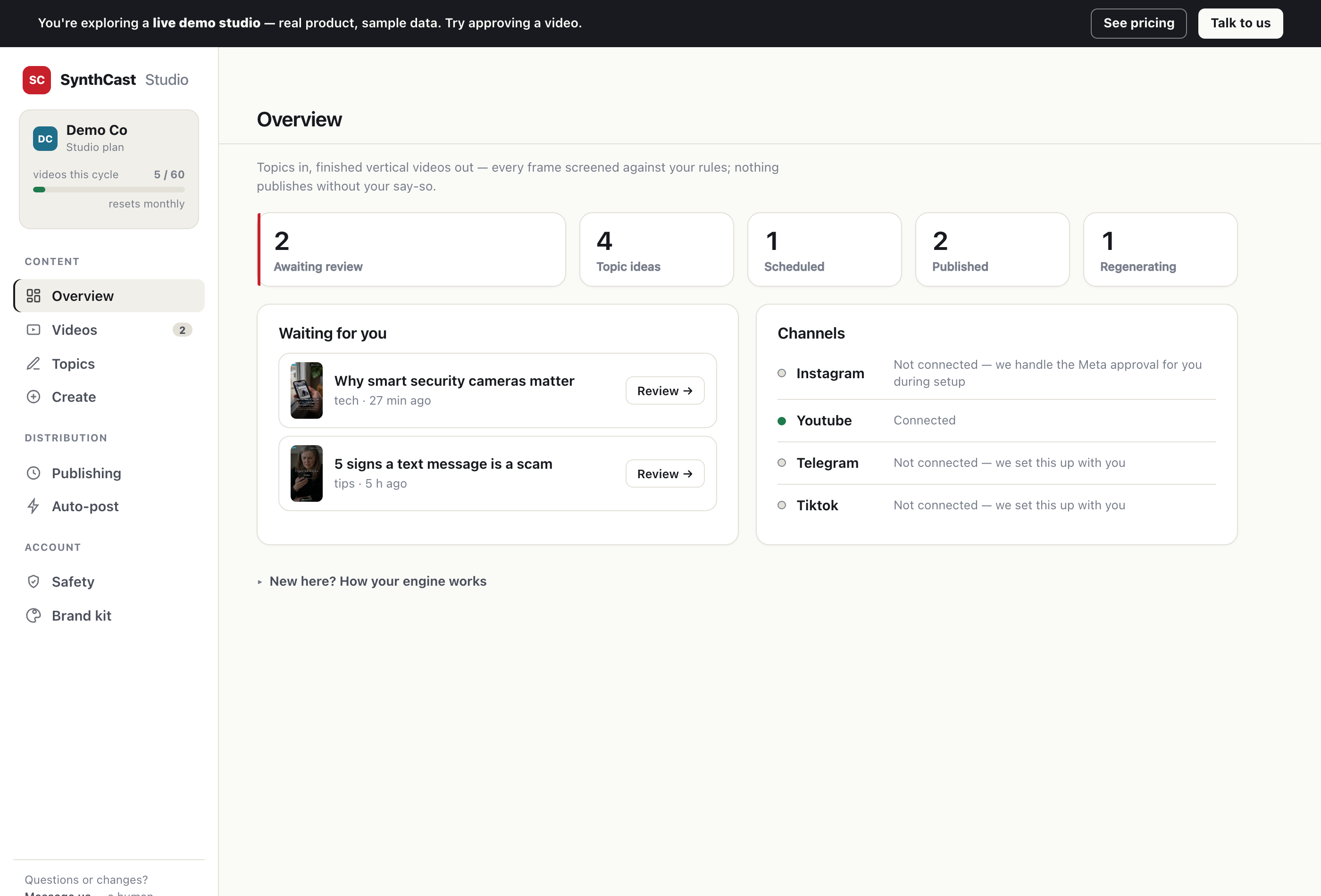
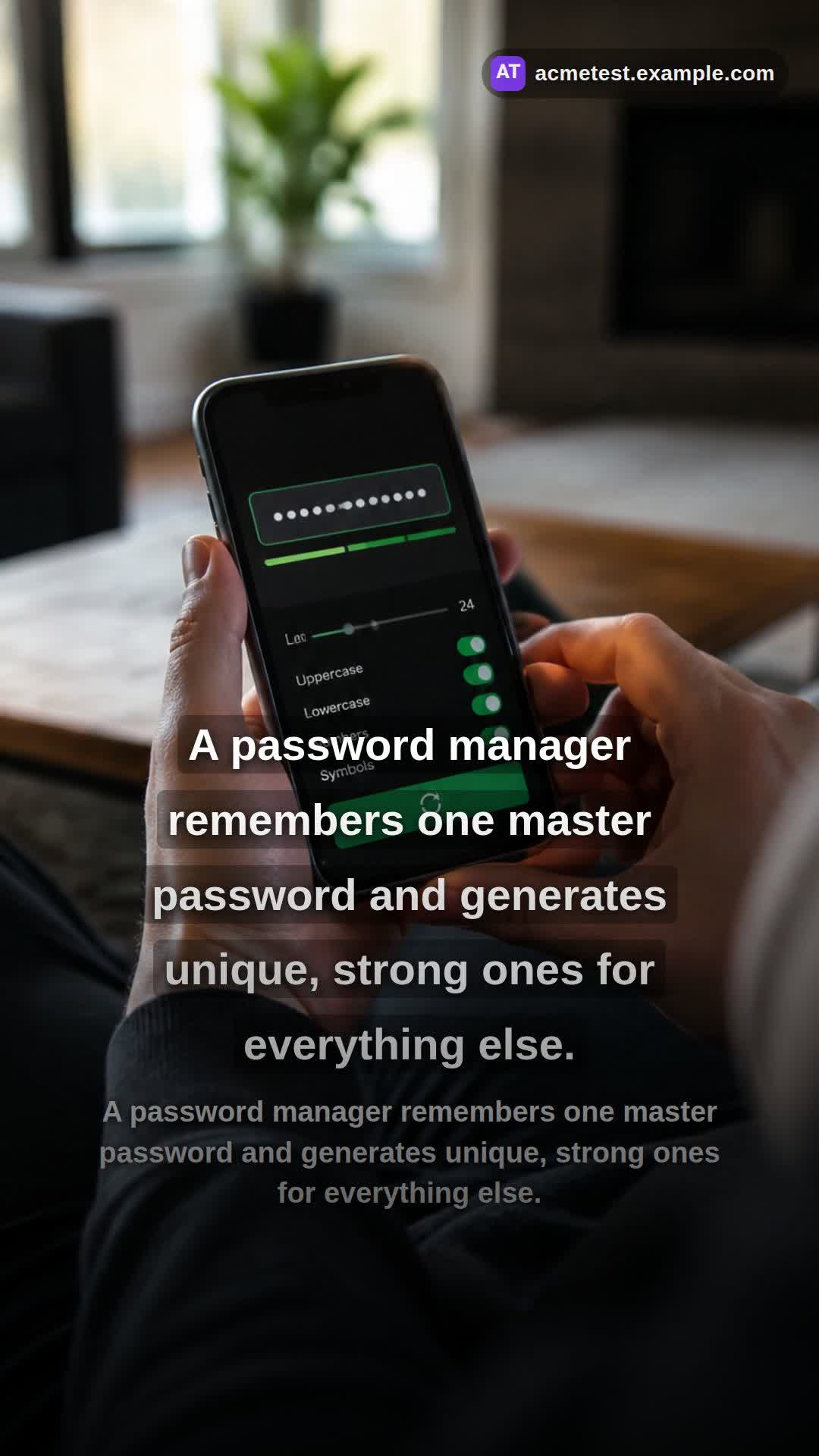
Real output
Videos this engine actually made
Not mockups. These are unedited files the pipeline produced and published on a schedule — script, voice, imagery, captions, music and branding, generated end to end. They're in Farsi, because that's the channel it was built for.
How it works
Seven steps, two of which nobody else runs
You give it subjects and rules once. After that it runs on its own, and stops at your desk before anything goes out.
Picks what to make next, balancing variety, season and what actually performed.
Writes a tight 4–6 scene script with an on-screen caption per scene.
Casts a narrator per format, and says your names the way you taught it.
Your library first, then generated or sourced to match the actual sentence.
A vision model reads the frames against your banned list. Anything flagged is quarantined.
You approve or reject. A rejection with a reason re-renders itself.
Fans out to your channels with per-channel captions, and learns from the results.
The part nobody else does
It is built to not embarrass you
Most AI video tools optimise for volume. This one was built for an audience where one wrong image ends the brand — so the guard rails came first, and they are the product.
Your banned list, in plain English
You write the rules the way you'd explain them to a new employee — no symbols, no config syntax. Every video is screened against them — sampled frames plus the full script — before you ever see it.
Nothing publishes without a human
Approve or reject from one page. Reject with a reason and it regenerates itself. Once you trust a category, you can let that one publish on its own — and only that one.
Claims checked against your own facts
For regulated topics, three independent passes verify every claim against a facts file you control. Disagreement blocks the video rather than guessing.
Say it right, forever
Teach it a brand, product or person's name once — the pronunciation sticks across every video, in every language it speaks.
Before you ask
What it does not do yet
You'll find this out in week one anyway, so here it is now.
- Instagram is connected by hand. Meta requires an app review before software can post to someone else's account on their behalf. That review is filed; until it clears, I connect your Instagram myself during setup. YouTube and Telegram connect normally; TikTok direct-posting is rolling out.
- YouTube has a daily upload ceiling per project. Higher tiers get their own quota so your uploads aren't queued behind anyone else's.
- English and Farsi are tested. Other languages are technically supported but unproven — I won't sell you one I haven't run.
- Onboarding is a conversation, not a signup form. That's why setup is a line item. It is also how your banned list gets written properly.
Pricing
Priced against the agency retainer it replaces
Not against bulk video tools. If you want the most clips per dollar, cheaper products exist and I'll tell you which. This is for brands where the wrong post is the expensive outcome.
- About 2 videos a day, 1 brand
- Up to 4 channels
- Every video vision-screened against your rules before you see it
- Approve or reject from one page; rejections re-render
- Publishes to YouTube and Telegram automatically — Instagram and TikTok we connect with you during setup
- About 8 videos a day, 3 brands, 3 seats
- Up to 12 channels
- Write your own banned list in plain language
- We teach the voice your names and products during onboarding
- A second, stricter model double-checks sensitive content
- Trusted categories can publish without you
- 10 brands, 30 channels, 10 seats
- White-label — your brand on the videos, the review pages and the studio
- Fact-check gate against your own verified facts file
- Approval links for clients who don't have logins
- Your own upload quota, not shared with anyone
Ten videos made on your brand and your subjects, delivered for you to review. No accounts connected, nothing published, no subscription. If you go ahead, the $99 comes off your first month.
Start the $99 pilot →Who this is for
- Brokerages, clinics, law and finance practices — anyone whose posts carry professional risk
- Community and diaspora media with cultural or political lines that must never be crossed
- Agencies running several client accounts who need an approval trail
Who it isn't for
- Bulk faceless channels chasing maximum output per dollar — cheaper tools win that fight
- Anyone who wants to clip existing long-form footage; this makes videos from scratch
- Teams who want to publish without a human ever looking. That's the one thing it won't do.
Questions
Asked before you ask
Who is this actually for?
Brands where a wrong post is expensive — brokerages, clinics, community media, agencies with reputations to protect. If you just want maximum clips per dollar, cheaper tools exist and we'll say so.
How does approval work?
Every video lands in your Studio with the full script, scene by scene. Approve to schedule it; reject with a reason and the engine re-renders with your feedback applied. Once you trust a content type, flip it to auto-post — the safety check still runs on every video.
What exactly does the safety check do?
You write your banned list in plain language during onboarding. A vision model screens every video against it — sampled frames plus the full script — before you ever see it — anything flagged is quarantined, never published.
Which channels work today?
YouTube and Telegram post automatically today. Instagram we connect by hand during setup while our Meta review completes, and TikTok direct-posting is rolling out — it's a line item in onboarding, not a surprise later.
What languages?
English and Farsi are battle-tested in production. Other languages render but we won't sell one we haven't run daily.
How does billing work right now?
The first customers are invoiced directly — deliberately. Card checkout is coming; the $99 pilot is credited against your first month either way.
Talk to me
Tell me what you'd post — and what must never appear in it
I read these myself and reply personally. If it isn't a fit, I'll say so.